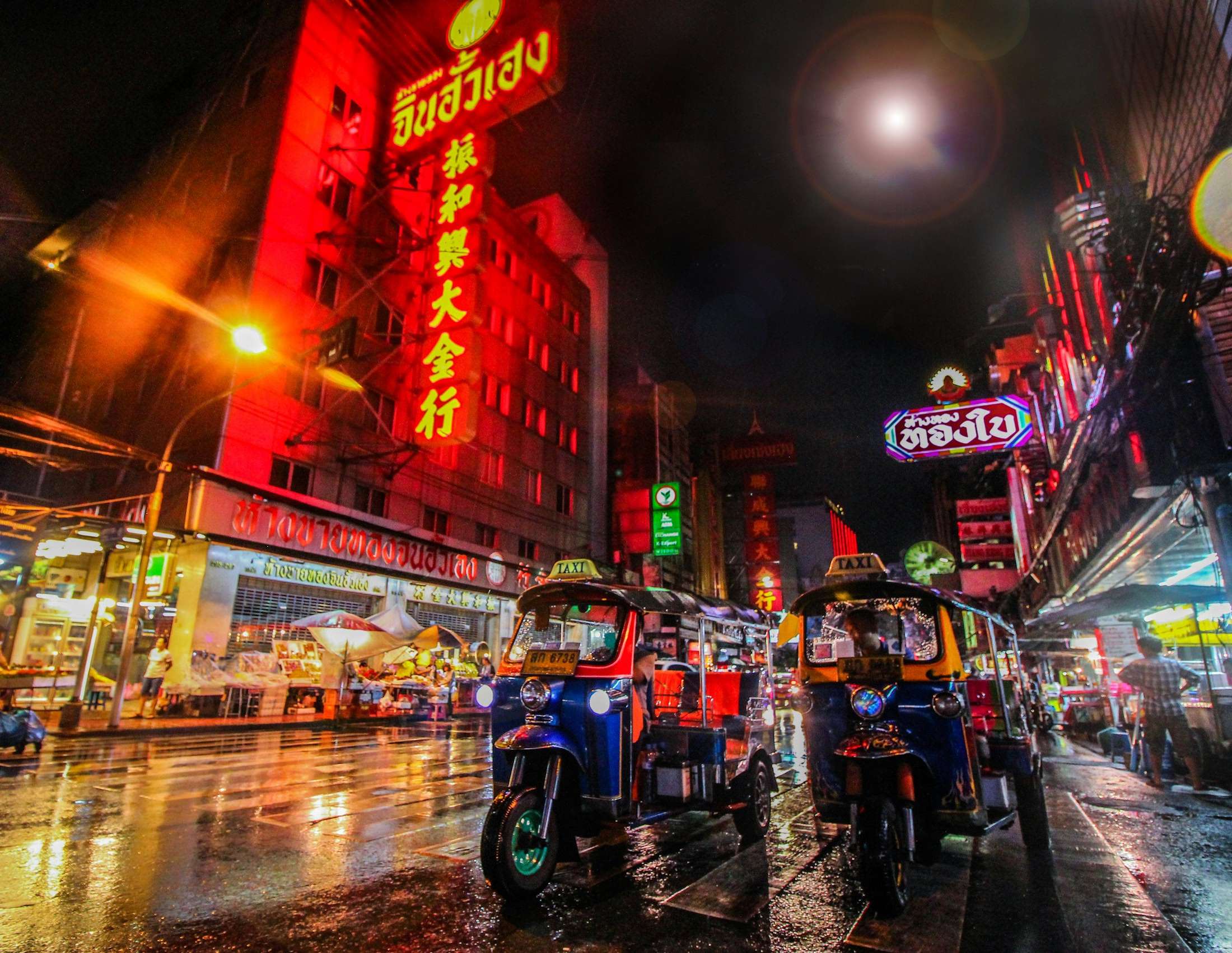
Destination choice is one of the earliest signals a programme sends. It influences how people arrive, how quickly they settle, what kind of energy surrounds the agenda and how naturally the group connects outside formal sessions.
Bangkok and Phuket can both support a thoughtful business programme, but they create very different rhythms. The right decision begins with the experience the programme needs to produce—not a list of attractions.
Begin with the purpose
Before comparing venues, define what should be different when participants leave. A programme centred on alignment, exchange or regional connection may need a different setting from one built around recognition, decompression or sustained time together.
Ask three questions:
- Is the programme primarily about concentrated work, shared discovery or a deliberate balance of both?
- How much transition time can the agenda comfortably absorb?
- Should the destination add energy or create distance from everyday routines?
These answers make the destination conversation more useful than starting with room counts alone.
Bangkok: momentum and range
Bangkok brings an unmistakably urban pace. The city can support programmes that benefit from variety, layered neighbourhoods and a strong sense of movement. Meetings, hospitality and cultural moments can be composed as a sequence of contrasting atmospheres.
That range is valuable, but it also makes editing essential. A good Bangkok programme does not try to include everything. It creates a clear route through the city and protects the transitions between formal and informal moments.
Bangkok often suits programmes that need:
- An energetic opening or closing chapter
- Multiple formats within one destination
- A visible connection to contemporary Thailand
- Deliberate contrast between business and cultural settings
Phuket: focus and shared time
Phuket changes the relationship between the agenda and the space around it. An island setting can help a group remain together for longer stretches, creating more room for conversations to continue beyond scheduled sessions.
The opportunity is not simply to add leisure. It is to use setting and pace with intention. A resort-led programme can feel contained and coherent when the venue, hospitality, transfers and off-site moments are designed as one journey.
Phuket often suits programmes that need:
- A stronger sense of retreat from daily routines
- More sustained time within one group environment
- Recognition and restoration alongside business content
- Shared discovery at a calmer pace
Compare the whole participant journey
The most useful destination comparison follows the participant from invitation to departure. Consider arrival patterns, transfer experience, check-in rhythm, meeting intensity, evening atmosphere and the emotional quality of the final day.
The right destination is the one that makes the programme’s purpose easier to feel—not simply easier to describe.
A clear brief may reveal that one destination is the natural answer. It may also suggest a two-part journey, but only when the transition adds meaning rather than complexity.
Make the decision visible in the design
Once the destination is chosen, let that choice shape the programme. Bangkok should not be treated like an island resort with a city outside the window. Phuket should not be filled with constant movement simply because the agenda has open space.
The strongest programmes allow place, purpose and atmosphere to reinforce one another. That is where destination selection becomes experience strategy.